Net-Positive Data Centers

Water-Positive, Energy-Generating Data Infrastructure

Where Data Centers Become Ecosystems

Concept program with design targets pending validation • TRL 2-4 technology development

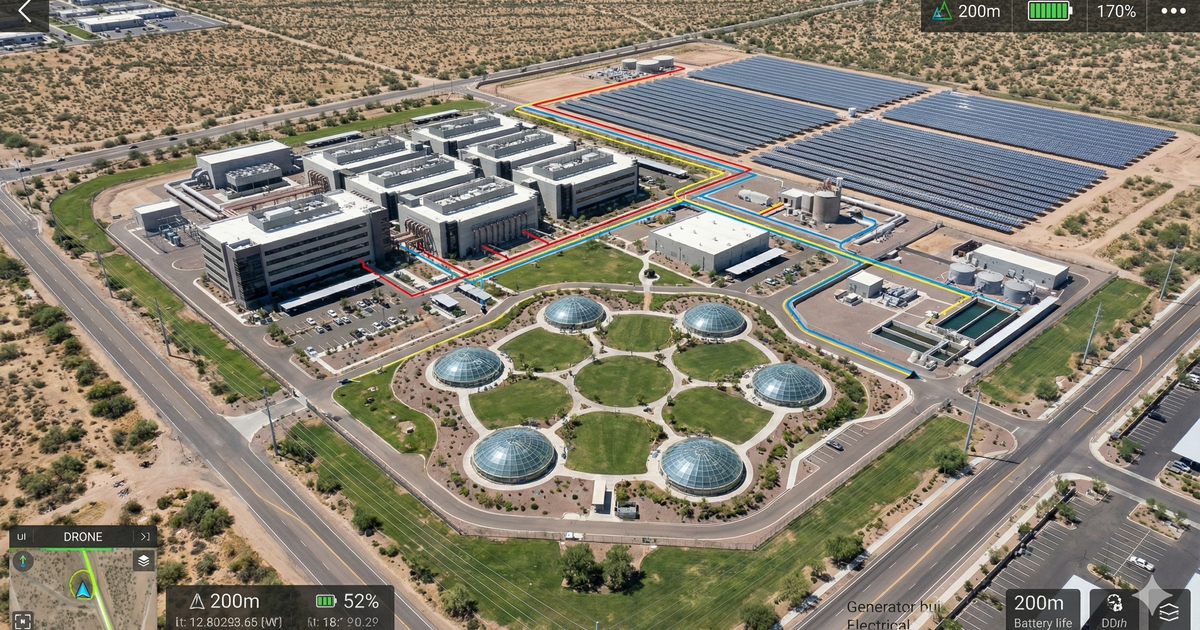
Artist's impression of a net-positive data center with integrated water and energy systems

Artist's impression of symbiotic data center infrastructure

Join Consortium Learn More

The Burning Platform

Data Centers Face Existential Threats

"We're hitting physical limits of current infrastructure models"

The Conventional Model is Broken

Linear Consumption → Exponential Problems

TRADITIONAL 100MW DATACENTER:

  • Water: 3-5M gallons/day (city of 50,000 people)
  • Energy: 150MW draw (PUE 1.5)
  • Waste: 35MW heat rejected to atmosphere
  • Cost: $96M/year in utilities

Result: Constrained growth, volatile costs, regulatory blockers

Our Vision: The Symbiotic Datacenter

From Extraction to Regeneration

Artist's impression showing the symbiotic regeneration cycle of a net-positive data center

Artist's impression of integrated resource generation systems

DESIGN TARGETS FOR 100MW DATACENTER:

  • Water: +300,000 liters/day net production target (subject to RH, airflow validation)
  • Energy: 95% grid reduction target (requires integrated CSP + THA + ADE)
  • Output: Near-zero carbon, positive water balance target
  • Cost: 80% OpEx reduction projection (pending validation)

* All metrics are engineering targets subject to pilot validation and metering

"Infrastructure that gives back more than it takes"

The Core Breakthroughs

Two Pioneering Inventions

Thermo-Hydraulic Amplifier (THA)

TRL 3-4: Component validation in progress

  • Converts waste heat (40-60°C) into hydraulic pressure (50-100 bar target)
  • Target: Generate electricity while producing distilled water
  • Adsorption/regeneration cycle using atmospheric moisture
  • Key validation: pressure pathway, MOF kinetics, condenser duty

Atmospheric Density Engine (ADE)

TRL 2-3: CFD and scaled demonstration required

  • Subterranean convection loop (~42m diameter, 32m height)
  • Controlled heat rejection with reduced surface impact
  • Target: Energy recovery from density-driven airflow
  • Key validation: buoyancy budget, pressure losses, fan requirements

Technical Deep Dive: THA System

Turning Waste into Resources

CONCEPT PROCESS FLOW:

Server Heat (40-60°C) → MOF Adsorption Cycling → Pressure Generation (target 50-100 bar) → Electricity + Pure Water

DESIGN TARGETS (10MW THERMAL INPUT):

  • Input: 10MW recoverable waste heat + 500kW electrical parasitics
  • Target Output: 20,000 L/day water* + 750kW net power*
  • Target Balance: Net positive water and energy

* Strongly dependent on RH, airflow, pressure drop, cycle kinetics, and condenser sink temperature. Seasonal derating curves required.

Patent-pending pressure-enhanced regeneration cycle • Working fluid and thermodynamic pathway under validation
Integrated System Performance

Design Targets for 10MW Facility (Pending Pilot Validation)

Note: Scenario B requires external CSP with storage for grid-independence claims. All values subject to measured performance.

Metric Conventional Reference Net-Positive Target Target Improvement
Grid Power 15 MW 0.75 MW* (with CSP) 95% reduction target
Net Water Balance -240,000 L/day +12,000 L/day* Positive surplus target
Carbon Footprint 60,000 tCO2e/yr 3,000 tCO2e/yr* 95% reduction target
Operating Cost $8-12M/yr $1-2M/yr (projected) 80% reduction projection

Integrated Resource Management: A New Approach

Leading data centers implement best practices in isolation. Project Saguaro targets measurable net impact through integrated waste heat recovery, alternative heat rejection, and atmospheric water harvesting under auditable boundaries.

Area Current Best Practice (State-of-the-Art) Net-Positive Data Centers (Symbiotic Regeneration)
Waste Heat Reuse: Waste heat is piped to provide district heating for nearby communities. A one-way transfer of a waste product. Upcycling: Waste heat is the primary fuel to generate two new resources: baseload electricity and pure water.
Water Offsetting: Water consumption is reduced, and the remainder is offset by investing in external environmental projects (e.g., wetland restoration). Generative: The system is inherently water-positive, physically manufacturing more pure water than the entire campus consumes.
Power Procurement: Massive-scale purchasing of renewable energy (wind/solar) from the grid to match consumption. Inherent Generation: Near total grid-independence by generating 24/7 baseload power from its own internal waste stream.
Integration Co-location: Simple, one-way resource transfers, like providing heat to an adjacent greenhouse. Symbiotic Ecosystem: A multi-directional, multi-resource circular economy. The data center is the anchor of a zero-carbon industrial park.

Market Opportunity

Solving a $50B+ Problem

$25B
Hyperscalers Utility Spend
$15B
Colocation Utility Spend
$10B+
Enterprise Utility Spend

Growth Drivers:

Competitive Landscape

Integrated Approach to Multiple Resource Challenges

Solution Water Impact Energy Impact Integration
Direct Air Capture Water only Energy consumer Component
Advanced Cooling Reduction only Minor savings Component
Water Recycling Reduction only Energy consumer Component
Renewable Energy No impact Solution only Component
NET-POSITIVE DATA CENTERS Net Positive Target Generation Target Integrated System

Business Model

Multiple Revenue Streams (Subject to Validation Results)

Technology Licensing

  • $5-10M per 100MW facility
  • 3-5% royalty on utility savings

Consortium Membership

  • $500K annual founding members
  • Field-exclusive licenses

Project Development

  • EPC partnerships
  • Operations and maintenance

Consortium Advantage

Strength Through Partnership

Core Members:

  • KAUST: MOF development & materials science
  • SwRI: Mechanical systems & turbine design
  • University of Cambridge: Systems integration
  • NREL: Techno-economic analysis

Industry Partners:

  • Founding operator positions available
  • Joint IP development
  • Preferred deployment rights

Traction & Timeline

Aggressive but Achievable

2026 (Phase 1)
Component validation: THA adsorption modules, ADE CFD & scaled demonstrator, metering plan finalization
2027-2028 (Phase 2)
Integrated prototype: Coupled THA+ADE system, seasonal derating curves, reliability testing
2028+ (Phase 3)
Pilot deployment: Site-selected facility with audit-grade metering and independent verification
2029+
Commercial deployment based on validated pilot performance

Seeking founding consortium partners for validation program

Key Validation Requirements

Critical Engineering Unknowns Requiring Resolution

THA System

  • Working fluid and pressure pathway demonstration
  • MOF adsorption bed capacity and kinetics under real conditions
  • Condenser duty vs. sink temperature envelope
  • Net energy balance at skid scale

ADE System

  • Buoyancy and pressure-loss budget validation
  • Mechanical assist requirements and net power impact
  • Geotechnical feasibility (groundwater, lining, access)
  • Stratification and mixing control

Integration Challenges

  • Circular Dependency: THA condenser requires cold sink; ADE cold stream depends on heat rejection load
  • Independent Cold Sink: Required for startup and degraded-mode bypass
  • Seasonal Variability: Performance derating curves needed for RH, ambient, vent backpressure
  • Controls Complexity: Potential for oscillation/hunting between coupled subsystems

Join Our Founding Consortium

What We Need:

  • Validation Partners: Site access for component and integrated testing
  • Co-development Resources: Engineering support and instrumentation
  • Funding: Staged investment aligned to Phase 1-3 validation gates
  • Technical Expertise: Thermal systems, adsorption, CFD, controls

What You Get:

  • Steering Committee: Input on validation priorities and site selection
  • Shared Learnings: Early access to pilot data (subject to confidentiality)
  • Deployment Rights: Preferred licensing based on contribution level
  • Standards Influence: Help shape auditable net-impact metrics

Request Information